
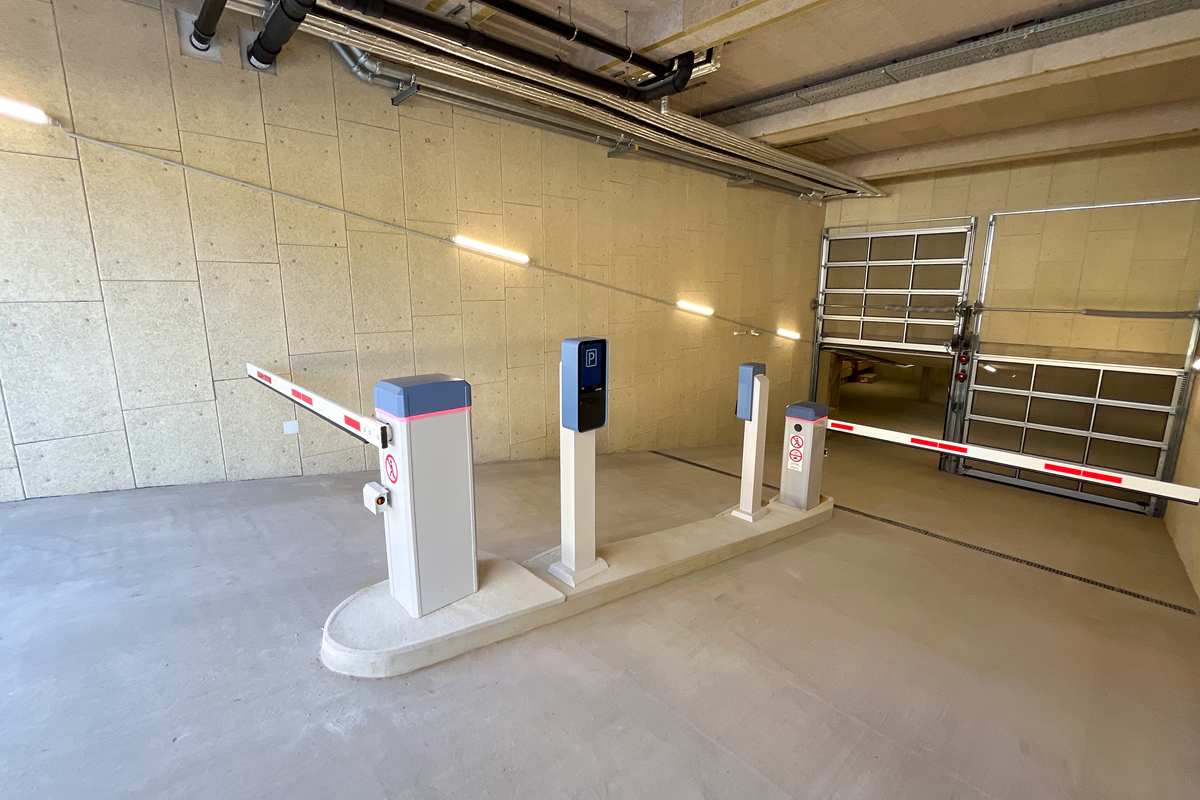
Every empty parking space costs revenue. Unlike an aircraft seat, where an empty seat is irretrievably lost once the plane takes off, the same principle in parking may seem less obvious at first. After all, the parking space will still be there tomorrow. But that is precisely the misconception: while the physical space remains, the time window in which it could have been occupied today has passed. It cannot be sold later. The result is lost revenue, even though the potential was there.
In this article, you will learn why vacancies in car park management have a direct impact on revenue and how you can take targeted steps to improve the occupancy of your parking facility.
Contents
Why Is Vacancy in Car Park Management an Economic Problem?
How Is Vacancy in a Car Park Similar to Other Industries?
What Can Operators Learn from Other Industries?
An Example: What Does a 10 % Vacancy Rate Cost in a Car Park?
How Can You Reduce Vacancy in Car Park Management?
Why Is Vacancy in Car Park Management an Economic Problem?
A small vacancy percentage may not sound like much. But a closer look quickly shows that it often hides significant revenue losses. Unlike products in a supermarket, parking spaces cannot be stored and sold at a later point in time. So when a parking space remains empty, it generates €0 in revenue.
Existing tariffs are often left unquestioned, while vacancies across the parking facility are simply accepted. Yet over the course of a year, these revenue losses can add up to substantial amounts.


How Is Vacancy in a Car Park Similar to Other Industries?
Other industries are also familiar with the challenge of unused capacity. Over time, however, they have developed targeted offers to counteract it. So what can car park operators learn from other sectors? It is worth taking a closer look at airlines, hotels and restaurants.
Best Practice: Airlines
A seat only has economic value until departure. After that, the opportunity to sell it is gone. That is why airlines actively manage their prices and occupancy levels. Flights to popular holiday destinations are often significantly more expensive during the summer season than in the low season, simply because demand is higher. During quieter travel periods, lower prices help generate additional bookings.
Best Practice: Hotels
Hotels also actively adjust their prices according to demand and season. A hotel room cannot be stored either. If it remains empty tonight, it cannot be sold tomorrow. For example, a city hotel can charge higher prices during a trade fair, concert or major event, simply because demand is there. During quieter weeks, special offers or weekend packages help fill vacant rooms.
Best Practice: Restaurants
Restaurants face the same issue of unused capacity. Not in the form of empty parking spaces, but in the form of empty tables. Here too, demand varies depending on the day of the week and time of day. While many restaurants are fully booked on Friday evenings, several tables may remain empty during the week. Offers such as lunch menus, after work specials or happy hours help make better use of available capacity and fill weaker time slots.
What Can Operators Learn from Other Industries?
Looking at other industries shows that vacancy in car park management can be reduced through targeted measures. The key is not only active marketing and the right tariff structure, but also ensuring that every customer type finds a suitable offer. Uniform tariffs leave potential untapped. Especially during periods of lower demand, flexible day, weekend or evening tariffs help generate additional occupancy.
Special offers for commuters, residents or event days, comparable to holiday offers in the hotel industry or lunch menus in restaurants, help fill available capacity and improve occupancy at different times of the day and week. With Arivo Parking OS, tariffs can be flexibly adjusted by time of day, weekday or target group, directly in the system and without any IT effort.
Are you looking for a simple and efficient parking system? Get in touch — together, we’ll find a solution that fits the requirements of your car park. Contact Arivo now
An Example: What Does a 10 % Vacancy Rate Cost in a Car Park?
At first glance, a few vacant parking spaces may seem harmless. Yet even a 10% vacancy rate in a car park can add up to a significant loss in revenue.
Imagine the following starting point: you operate a car park with 200 parking spaces. The average daily revenue per occupied parking space is € 12. With a 10 % vacancy rate, 20 parking spaces per day stay empty.
Scenario 1: 20 Parking Spaces Remain Empty
In the first scenario, only 180 of the 200 parking spaces are used. With an average daily revenue of €12 per occupied parking space, the car park generates € 2,160 in revenue per day.
Calculated over a month with 30 days, this equals € 64,800 in revenue, while annual revenue amounts to € 788,400. The remaining 20 parking spaces stay empty and generate no revenue during this period.
Scenario 2: The 20 Vacant Parking Spaces Are Offered for € 7
In the second scenario, the 20 vacant parking spaces do not remain empty, but are offered at a reduced tariff of € 7 per day. The 180 regularly occupied parking spaces continue to generate € 2,160 per day. The 20 spaces sold at the lower rate generate an additional € 140 per day. This increases total daily revenue to € 2,300.
Calculated over one month, this results in € 69,000 in revenue. Projected over a year, this amounts to € 839,500.
What Does the Comparison Show?
The difference between the two scenarios is substantial: Scenario 2 generates an additional € 51,100 in revenue per year. Often, the issue is not a lack of awareness of the problem, but a lack of tools and opportunities to take targeted action and actively fill available capacity.


How Can You Reduce Vacancy in Car Park Management?
The key is to fill available capacity in a targeted way. But which measures can help reduce vacancy?
- Define a base tariff: Set your base tariff at a deliberately accessible level. This lowers the barrier to using your parking facility. Analysing your user groups helps you choose a suitable tariff based on their willingness to pay. Questions such as “Who parks here?” and a look at the tariffs of nearby parking facilities can help identify appropriate pricing. As a general rule, however, a central location allows for higher prices.
- Offer time based tariffs: Demand varies depending on the time of day, weekday, season and location. With flexible parking tariffs such as evening tariffs, weekend tariffs or special offers for commuters, you can make your parking facility more attractive during weaker time slots and improve car park occupancy in a targeted way.
- Make your parking facility attractive to long term parkers: Both long term parkers and operators benefit from long term contracts. Parkers save the time consuming search for an available parking space and, similar to pay per use, usually benefit from more attractive tariffs and added convenience. For operators, long term parkers create predictable revenue and stable baseline occupancy.

- Make your parking facility attractive to long term parkers: Both long term parkers and operators benefit from long term contracts. Parkers save the time consuming search for an available parking space and, similar to pay per use, usually benefit from more attractive tariffs and added convenience. For operators, long term parkers create predictable revenue and stable baseline occupancy.
- Build partnerships: Hotels, gyms, medical practices and law firms all have employees, guests and visitors who regularly need parking. Partnerships that offer parking discounts for customers and guests create additional occupancy and help minimise parking space vacancy. With Arivo Discount Management, discounts for different partners can be set up easily, managed flexibly and adjusted quickly, while keeping a clear overview at all times.
- Actively market your parking facility: Parking facilities need to be actively visible. This does not only mean signage on site, but also visibility through a website or a Google Business Profile. Operators who do not actively market their parking facility remain dependent on random demand and give away revenue potential every day.
Regardless of this, operators should ask themselves the following questions:
-
At which times of day do parking spaces remain empty?
-
Who uses the parking facility and why?
-
Which tariffs or offers make weaker periods more attractive?
-
Which partnerships could generate additional demand?
What matters are data driven insights that show when your parking facility is being used and which patterns occur. With the Arivo Occupancy Report, you get a central tool for detailed insights into the use of your parking facilities. Real time data and occupancy analyses help you make well founded decisions in car park management.
Are you looking for an end-to-end solution to digitalise your car park sustainably and run it more efficiently? With over 1,200 completed projects, we know exactly what matters. Get in touch — together, we’ll find the right solution for your car park. Contact Arivo now
Conclusion
An empty parking space is lost revenue. What remains empty today cannot be sold tomorrow. In car park management, the key is not always the highest individual price per parking space, but the best overall commercial return.